
NL Journal of Medical and Pharmaceutical Sciences
(ISSN: 3108-0502)
Comparative Effects of Muscle Energy Technique, Foam Rolling, and Ergon Technique on Hamstring Flexibility: A Simplified Approach for Young Individuals in a Modern Rehabilitation Study
Author(s) : Rahul Hajare*. DOI : 10.71168/NMP.01.03.116
Abstract
This study aimed to evaluate the comparative effectiveness of three manual therapy techniques Muscle Energy Technique (MET), Foam Rolling (FR), and the Ergon Technique in improving hamstring flexibility. The effectiveness of static stretching and the M2T Blade was not included in this investigation. Participants of varying ages were recruited to enhance the generalizability of the findings. Results indicated that the Ergon Technique was more effective than foam rolling in increasing hamstring flexibility. Keywords: Ergon Technique, Muscle Energy Technique, Foam Roller, Hamstring Flexibility, Myofascial Release.
Introduction
Flexibility the ability to move a joint through its full range of motion is a fundamental yet often overlooked component of physical fitness. Unlike other fitness elements such as strength and endurance, flexibility is joint specific; flexibility in one joint (e.g., the shoulder) does not necessarily translate to another (e.g., the hip). While females generally demonstrate greater flexibility than males, both genders experience a decline in flexibility with age [1]. This reduction is not solely a consequence of aging but is also influenced by decreased physical activity. When joints are not routinely moved through their full range of motion, flexibility tends to diminish. This highlights flexibility as a potentially more fragile component of fitness, particularly sensitive to both aging and sedentary behavior. Further research is needed to explore the mechanisms behind this decline. The hamstring muscle group, comprising multiple attachments, plays a critical role in lower extremity and pelvic movement [2]. However, hamstring tightness can impair functional performance and increase the risk of musculoskeletal injuries. Previous studies have identified associations between hamstring stiffness and lower back pain in both adolescents and adults, as well as a heightened risk of injury due to limited flexibility. Therefore, maintaining optimal hamstring flexibility is essential for overall musculoskeletal health and injury prevention. Flexibility of the hamstrings is commonly assessed using clinical tools such as the Straight Leg Raise (SLR) test and the Active Knee Extension test. Various therapeutic interventions have been employed to improve hamstring flexibility, including foam rolling, the Ergon technique, and Muscle Energy Technique (MET). The Ergon technique is a form of instrument-assisted soft tissue mobilization (IASTM) that targets fascial restrictions using specialized tools. Foam rolling is a widely used self myofascial release method aimed at reducing muscle tension and enhancing flexibility. Muscle Energy Technique is a form of manual therapy involving voluntary muscle contractions against resistance to lengthen shortened or tight muscles [3]. Despite the growing use of these techniques, there is a lack of comparative research evaluating their relative effectiveness in improving hamstring flexibility. This study aims to address this gap by comparing the effects of the Ergon technique, foam rolling, and Muscle Energy Technique on hamstring flexibility in young adults. The findings suggest that the Ergon technique is more effective than the other two modalities. However, further research is warranted to better understand the underlying mechanisms of its effectiveness and to determine its long-term safety and efficacy. These results may contribute to the development of evidence-based guidelines for clinicians, therapists, and coaches in managing hamstring tightness and preventing related injuries [4,5].
Methodology
Study Design and Sample
This experimental study was conducted at the Sandip University Campus, Nashik, following approval from the institutional ethics committee. A total of 45 participants were recruited through simple random sampling using the chit method. The inclusion criteria consisted of healthy male and female individuals aged 20 to 25 years with hamstring flexibility limitations between 35° and 45°, as assessed by goniometric measurement. Participants were excluded if they had a history of hamstring injury within the past two months, lower extremity surgery within the past six months, skin infections, neurological deficits affecting the lower limbs, or lumbar disc herniation.
Instruments and Procedures
Upon obtaining informed consent, baseline data were collected using a standard goniometer to measure hamstring flexibility. Two therapeutic tools were also utilized: An Ergon instrument (instrument-assisted soft tissue mobilization tool) and A foam roller (measuring 3 feet in length and 5.5 inches in diameter). Participants were randomly assigned to one of three intervention groups, with 15 subjects per group: Group A: Ergon Technique, Group B: Muscle Energy Technique (MET) and Group C: Foam Rolling. Initial measurements were taken on Day 1 (pre-test), and a standardized data collection form (Performa) was completed for each subject. Group A Ergon Technique has Participants in Group A received the Ergon Technique, a form of instrument-assisted soft tissue mobilization. Each participant was positioned prone, with the knee joint flexed between 30° and 60°. After applying massage oil to the hamstring region, the Ergon instrument was used to perform mobilization for 60 seconds, repeated 30 times, moving from the muscle belly along the skeletal muscle line toward the popliteal fossa (ginglymoid joint fossa).
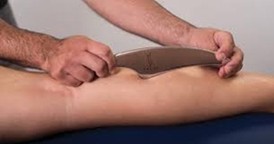 Figure 1: Ergon Technique
Group B Foam Rolling
Participants in Group B received the Foam Rolling intervention [Figure 2]. Each subject was instructed to sit with their legs extended and crossed at the ankles, ensuring the hamstring muscles remained relaxed. A high- density foam roller was placed beneath the posterior thighs, with participants supporting their upper body using their hands positioned on the ground behind them. Participants performed self-myofascial release by rolling the hamstrings along the foam roller, from just above the popliteal fossa (behind the knee) to just below the ischial tuberosity (base of the pelvis). Each leg was rolled for 20 seconds, maintaining consistent pressure and controlled movement throughout the session.
 Figure 2: Foam Roller (High Density)
Group C Muscle Energy Technique (MET)
Participants in Group C received the Muscle Energy Technique (MET) intervention [Figure 3]. Each subject was positioned supine with the hip and knee flexed to 90 degrees. The knee was then actively extended against resistance to engage the hamstring muscles. A mild isometric contraction of the hamstrings was performed for five seconds, followed by a three-second relaxation period. This contraction relaxation cycle was repeated according to the established protocol to facilitate hamstring muscle lengthening.
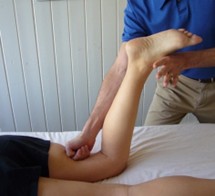 Figure 3: Muscle Energy Technique (Isometric Contraction)
Biostatistics Study
Data were recorded and analyzed using IBM SPSS Statistics version 25.0” indicates that IBM SPSS Statistics, a software for statistical analysis. Within group differences in hamstring flexibility were assessed using the paired samples t-test, while between-group comparisons were conducted using one-way analysis of variance (ANOVA). Results are presented as mean ± standard deviation (SD). A significance level of p < 0.05 was considered statistically significant.
Results
A total of 60 participants were included in the study, comprising 48.7% males and 54.3% females. The mean hamstring flexibility in the Ergon Technique group increased from 58.60 ± 9.14 on Day 1 to 65.48 ± 9.45 on Day 12, showing a mean improvement of 12.86 units. In the Muscle Energy Technique (MET) group, the mean flexibility improved from 58.74 ± 6.42 to 64.15 ± 6.95, while in the Myofascial Release (Foam Rolling) group, flexibility increased from 56.75 ± 8.98 to 65.87 ± 9.50. All three groups demonstrated statistically significant improvements in hamstring flexibility over the 12-day period (p < 0.05). However, the Ergon Technique group exhibited the greatest improvement, indicating superior effectiveness in enhancing hamstring flexibility compared to MET and foam rolling. One-way ANOVA revealed no statistically significant differences among the groups after treatment (p = 0.182), indicating that all three interventions were similarly effective in improving hamstring flexibility.
Table 1: Baseline Characteristics of Samples (n=60)
|
Gender |
Treatment | |||||
| Ergon (n=15) | Muscle Energy (n=15) | Myofascial Release (n=15) | ||||
| n | % | n | % | n | % | |
| Male | 20 | 45.7 | 20 | 48.7 | 20 | 45.8 |
| Female | 20 | 55.3 | 20 | 55.3 | 2 | 55.3 |
Table 2: Mean Comparison of flexibility of hamstring muscle
|
Treatment |
Mean |
SD |
Mean Difference |
p-value |
|
| Ergon | Day-01 | 55.60 | 9.45 | -14.86 | <0.01* |
| Day-12 | 65.48 | 6.25 | |||
| Muscle Energy | Day-01 | 54.75 | 6.45 | -12.40 | <0.01* |
| Day-12 | 64.15 | 6.95 | |||
| Myofascial Release | Day-01 | 56.75 | 8.98 | -8.14 | <0.01* |
| Day-12 | 65.85 | 9.45 | |||
| *p<0.05 was considered significant using Paired Sample t-test | |||||
Table 3: Mean Comparison of post Flexibility of Hamstring Muscle among Treatments
| Treatments | N | Mean | Std. Deviation | p-value |
| Ergon | 20 | 65.48 | 6.25 |
0.182 |
| Muscle Energy | 20 | 64.13 | 6.91 | |
| Myofascial Release | 20 | 65.85 | 9.49 | |
| *P-value obtained using one way ANOVA | ||||
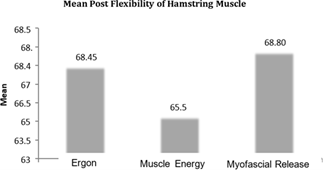 Figure 4: Mean Comparison of Post Treatment Hamstring Muscle Flexibility Among Intervention Groups.
Discussion
The purpose of this study was to evaluate the effectiveness of three techniques Ergon, Muscle Energy Technique (MET), and foam rolling on hamstring muscle flexibility (Figure 4). Hamstring muscle stiffness is a common condition, particularly among individuals with a sedentary lifestyle, and is typically managed through various physical therapy interventions, diagnosed primarily through physical examination. The findings of the current study demonstrated that the Ergon technique was the most effective in increasing hamstring flexibility. These results align with the study by Jong Hoon Moon et al. (2016), which investigated the effect of the Ergon Technique on hamstring flexibility and pain intensity in patients with nonspecific low back pain. Their study reported significant improvements in hamstring extensibility in the Ergon group compared to static stretching, concluding that the Ergon Technique may be a simple and effective intervention to enhance hamstring extensibility and reduce pain in clinical practice. Similarly, Fousekis K. et al. (2016) evaluated myofascial trigger points (MTrPs) management and reported that Instrument-Assisted Soft Tissue Mobilization (IASTM), ischemic pressure techniques, and cupping are effective in reducing tenderness of MTrPs. Among these, the Ergon© IASTM technique demonstrated significantly greater improvements in pain symptoms, highlighting its potential as a superior therapeutic approach. Participants in the Muscle Energy Technique group also showed significant improvement. These findings are consistent with the study by M. Prasad Naik et al. (2017), which demonstrated notable improvements in hamstring and calf muscle flexibility following MET interventions. Furthermore, Arun et al. (2018) concluded that MET is a straightforward technique that effectively increases muscle length and joint range of motion by inducing biomechanical and neurophysiological changes, as well as increasing stretch tolerance. The technique promotes relaxation of hyperactive muscles and associated connective tissue, thereby facilitating muscle elongation. In the Myofascial Release (foam roller) group, significant improvements were also observed, with mean hamstring flexibility increasing seen in the biostatistics table given in the manuscript. This finding aligns with the study by Scott W. Cheatham et al. (2015), which reported that roller massage and foam rolling are effective in enhancing joint range of motion and muscle performance pre- and post-exercise. However, due to methodological variability across studies, there remains no consensus on the optimal self-myofascial release (SMR) program. In summary, all three interventions Ergon technique, Muscle Energy Technique, and foam rolling demonstrated significant improvements in hamstring flexibility, with the Ergon technique showing the greatest mean improvement. These findings support the clinical application of these techniques in managing hamstring stiffness, particularly in populations with limited flexibility.
Conclusion
This study concluded that the Ergon technique, Muscle Energy Technique, and foam rolling are all effective interventions for improving hamstring muscle flexibility. Among these, the Ergon technique demonstrated superior efficacy compared to Muscle Energy Technique and foam rolling in patients with hamstring muscle stiffness. All figures are for presentation purposes to avoid distraction.
References
- Moon JH, Lee SM, Lee JH. Effect of Ergon technique on hamstring flexibility and pain intensity in patients with nonspe- cific low back pain. J Phys Ther Sci. 2016;28(4):1170–3. doi:10.1589/jpts.28.1170
- Fousekis K, Kounavi E, Doriadis S, Mylonas K, Kallistratos E. The effectiveness of instrument-assisted soft tissue mobi- lization technique (Ergon© technique), cupping, and ischemic pressure techniques in the treatment of amateur ath- letes’ myofascial trigger points. J Novel Physiother. 2016;6(3):1–5. doi:10.4172/2165-7025.S3-009
- Naik MP, Reddy DAV, Madhavi DK. Effect of muscle energy technique on flexibility of hamstring and calf muscles and sprinting performance in sprinters. Int J Physiother. 2015;2(5):718–23. doi:10.15621/ijphy/2015/v2i5/78225
- Arun B, Reddy P. Muscle energy technique: A review of its biomechanical and neurophysiological basis for improving J Clin Diagn Res. 2018;12(6):YE01–4. doi:10.7860/JCDR/2018/34883.11563
- Cheatham SW, Kolber MJ, Cain Self-mobilization using a foam roller versus a roller massager: Which is more effective for increasing hamstrings flexibility? J Strength Cond Res. 2015;29(6):1746–52. doi:10.1519/JSC.0000000000000891
This article licensed under the Creative Commons Attribution 4.0 International License CC-BY 4.0., which permits unrestricted use, distribution, and reproduction in any medium, provided the original author and source are properly credited.

 2026 Open Access Publisher